I’ve rarely seen a client sadder than when a nutritionally-misinformed doctor tells them they can no longer eat the food they grew up eating because of a health diagnosis. Sometimes the health practioner ends up stigmatizing an entire cuisine.
“They told me it has too much starch, is too rich, too carby, too… [fill in the blank].” Or, also very common, “My doctor told me I can’t eat rice anymore.”
This hurts my heart. And, it’s rarely nutritionally correct!
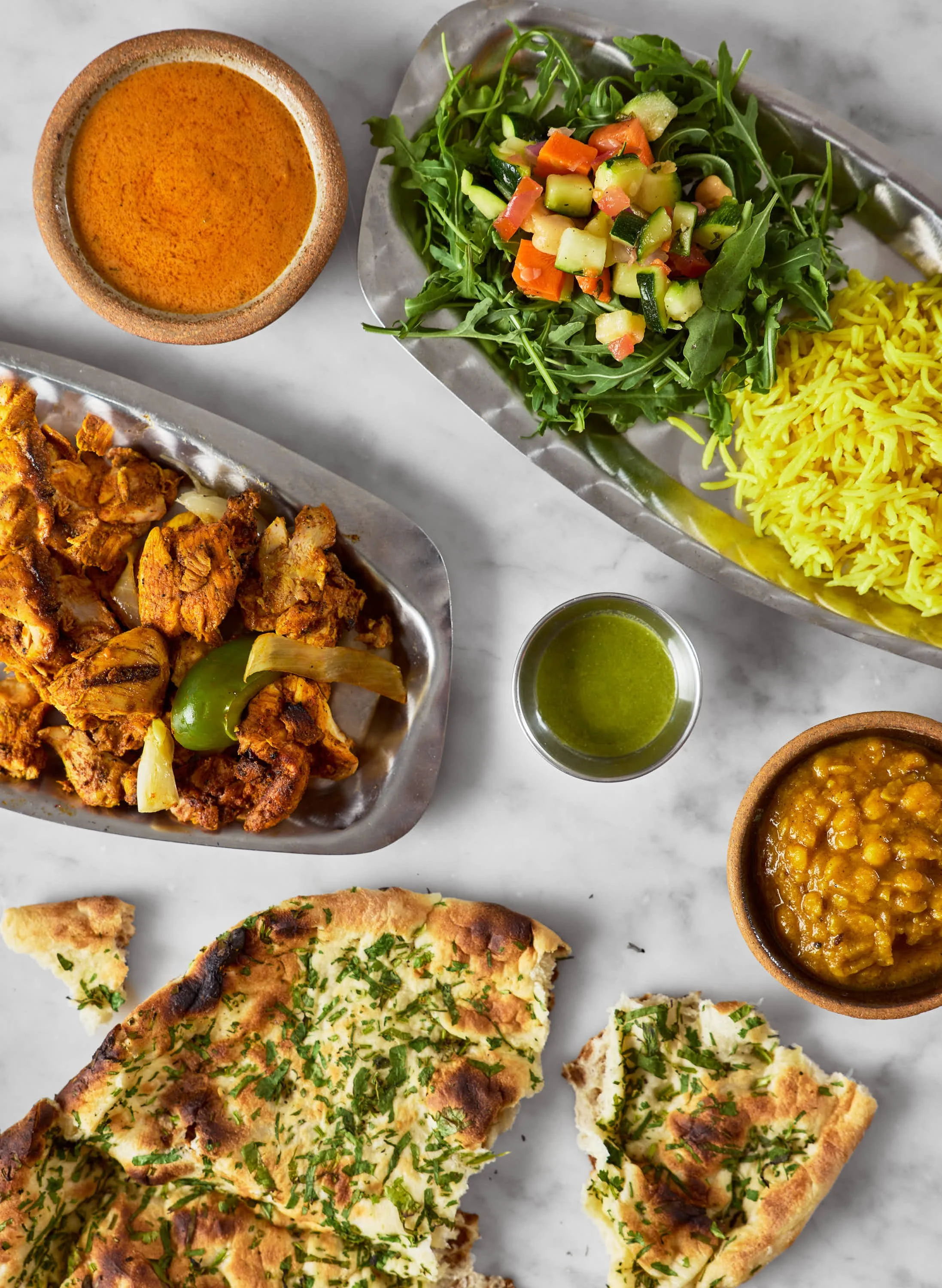
*I included the header photo above as an ode to an Indian-American client of mine whose doctor told her she could no longer eat the cultural foods she adored because they had “too many carbs” for a person living with diabetes.
Though not always the case, often the person giving the advice is of a different ethnic or cultural background than the patient. Maybe they have little experience with the patient’s cultural cuisine, or how it is actually prepared or eaten at home. That someone might dismiss entire cuisines that have nourished and given pleasure to people for centuries suggests a deeper issue, but today, let’s address why from a nutrition perspective this belief is unfounded.
The truth is that ALL cuisines can fit into a balanced diet.
One way to form a healthy diet with many different foods, prepared with varied ingredients in a multitude of of ways, is by using the “balanced plate” method.
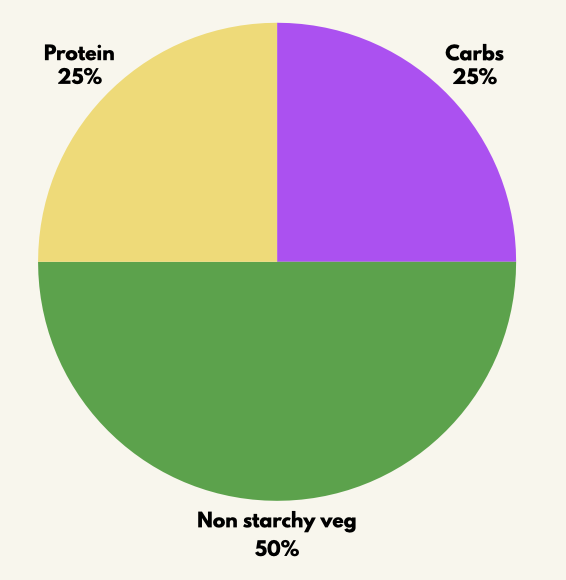
The pie chart above represents what a balanced diet looks like on a plate. To give our bodies the right amount of nutrients they need to thrive, **most adults should fill half their plate, bowl or dish with “non-starchy” vegetables, a quarter with protein, and a quarter with carbs. It doesn’t matter if these components are mixed in a bowl, or stay separate on the plate when served, as long as they make up around that much of a meal.
You can create a balanced diet from foods from nearly any cuisine by filling in the portions of the “plate” with whatever proteins, vegetables, and carbs fit into those spaces.
For example, the rice or lentils in the above photo could neatly into the carbs section. Vegetarians might extend that carb section a little past 25% with a mix of rice and lentils. Proteins like the featured tandoori chicken, fish, nuts, cheese or yogurt could nestle into the yellow section. A mix of non-starchy vegetables from sautéed to salad would fit neatly into the green section.
**Are there adjustments that might need to be individualized per cuisine, health diagnosis, and per eating preferences? Absolutely. To start, saturated fat and added sugars should make up less than 10% each of a person’s daily calories. Some people, especially those living with diabetes or insulin resistance, might want to talk to a dietitian for additional advice about food pairing or timing.
Nutrition is nuanced. But living a healthy life can and should include the foods you love.
