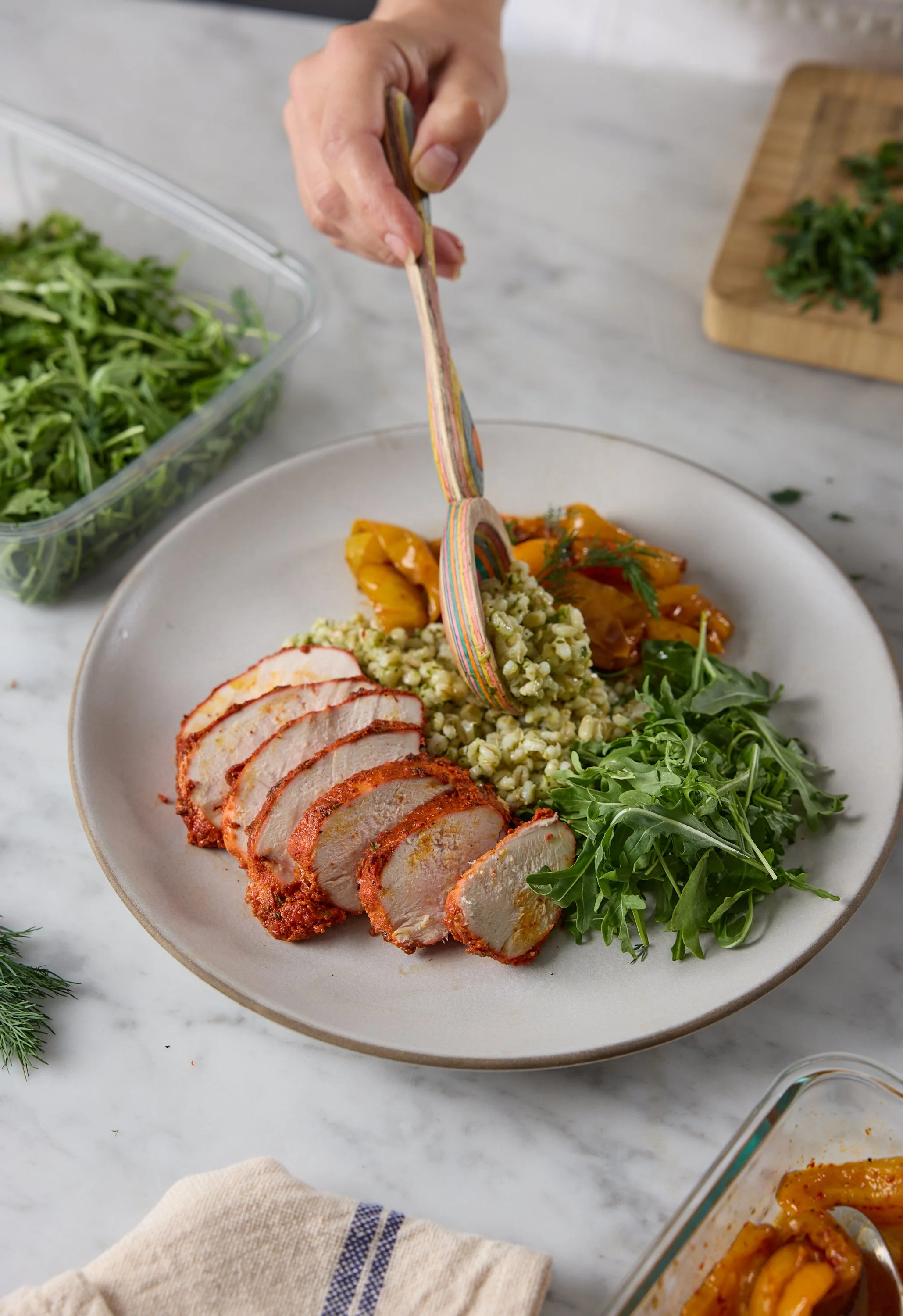
Achiote chicken with barley, arugula and roasted red peppers
Anyone who has received a type 2 diabetes or prediabetes diagnosis knows how quickly the panic sets in. A common early fear? That someone can never truly enjoy carbs again. As a dietitian that was diagnosed with prediabetes a couple years ago, I knew better and I still pictured all the bread and rice I imagined couldn’t eat. (Now I have a history of prediabetes, but that’s for another newsletter.)
Luckily, there are many things those living with prediabetes or diabetes can do to help them manage their blood sugar. Bonus– none of them include avoiding carbohydrates.
One of the first things someone living with diabetes should know how to do is build a “balanced plate.”
And, yes, if you read my last newsletter, you probably already know what a “balanced plate” is! A balanced plate is made up of 50% non-starchy veg, 25% carbohydrates, and 25% protein.
Surprising to some, the same percentages apply to those with living with diabetes or prediabetes as those who have normal blood sugar.
Sure, people managing their blood sugar might have to be more careful of how amply they fill that carb section and exercise portion control, mind how certain carbs affect them personally, and especially if managing insulin doses, consider carb counts.
In general though, the same balanced plate guidelines apply to those with diabetes.
In the photo above I include one example of a balanced meal. Below I’ll also describe how to turn most of the same ingredients into a second balanced meal.
The plate in the photo is packed with 50% arugula and roasted bell peppers-non-starchy vegetables, around 25% chicken with achiote seasoning- protein, and 25% pre-cooked barley I bought at the grocery store- carbohydrates. (I’m going to admit that I probably pushed the carbs to 30% of the plate and slipped another slice of chicken for the sake of a pretty shot, but you get the idea). Could someone with diabetes serve another protein instead? Absolutely. Different vegetables? Just as long as they’re non-starchy (not potatoes, butternut squash, yams, etc). They can mix up the carbohydrates, too. And while it’s true that high-fiber carbs like barley or beans are optimum for blood sugar, sometimes you just need white rice or white rice and beans.
For another meal, I might take similar ratios of chicken and bell peppers shown above, switch out the barley for beans, then add some pico de gallo, guacamole, and hot sauce to make a burritos. This is what you call meal planning.
I hope you found this helpful. This is just one of the many things one living with diabetes or prediabetes can do to manage their blood sugar.
Thank you for reading!
* Note: this is not medical advice. This is general nutrition information. Anyone living with diabetes, especially those with a new diagnosis, should work directly with a medical professional, including a dietitian.
