Despite what many think, eating healthy does not mean you have to chain yourself to the stove, or make every meal with exclusively farm-fresh ingredients. Is it awesome if you can grow your own vegetables and have time to slow cook beans from scratch? Sure! But is it necessary or even always a good idea? Nope.
The drive for kitchen perfection often scares people into thinking if they’re not doing it all, they’re not doing enough. As a dietitian and trained chef, I know this couldn’t be further from the truth.
I prefer that instead, people embrace what makes them feel better and healthier in the life they’re currently living.
For some, this is making food from scratch. For others, this is mixing store-bought food with homemade. For others, it’s buying all store-bought or restaurant-made food, but with intention.
For example, right now I’m currently working a part-time job in community nutrition that requires commuting, setting up my own part-time private nutrition practice, teaching cheese classes, and developing future nutrition class curriculum. I’m busy and don't have time to cook everything from scratch.
So how I’m supporting my health in the kitchen is by shortening my prep time, and keeping things on hand that add flavor, quick.
Here’s a peek at my current kitchen “cheat sheet."
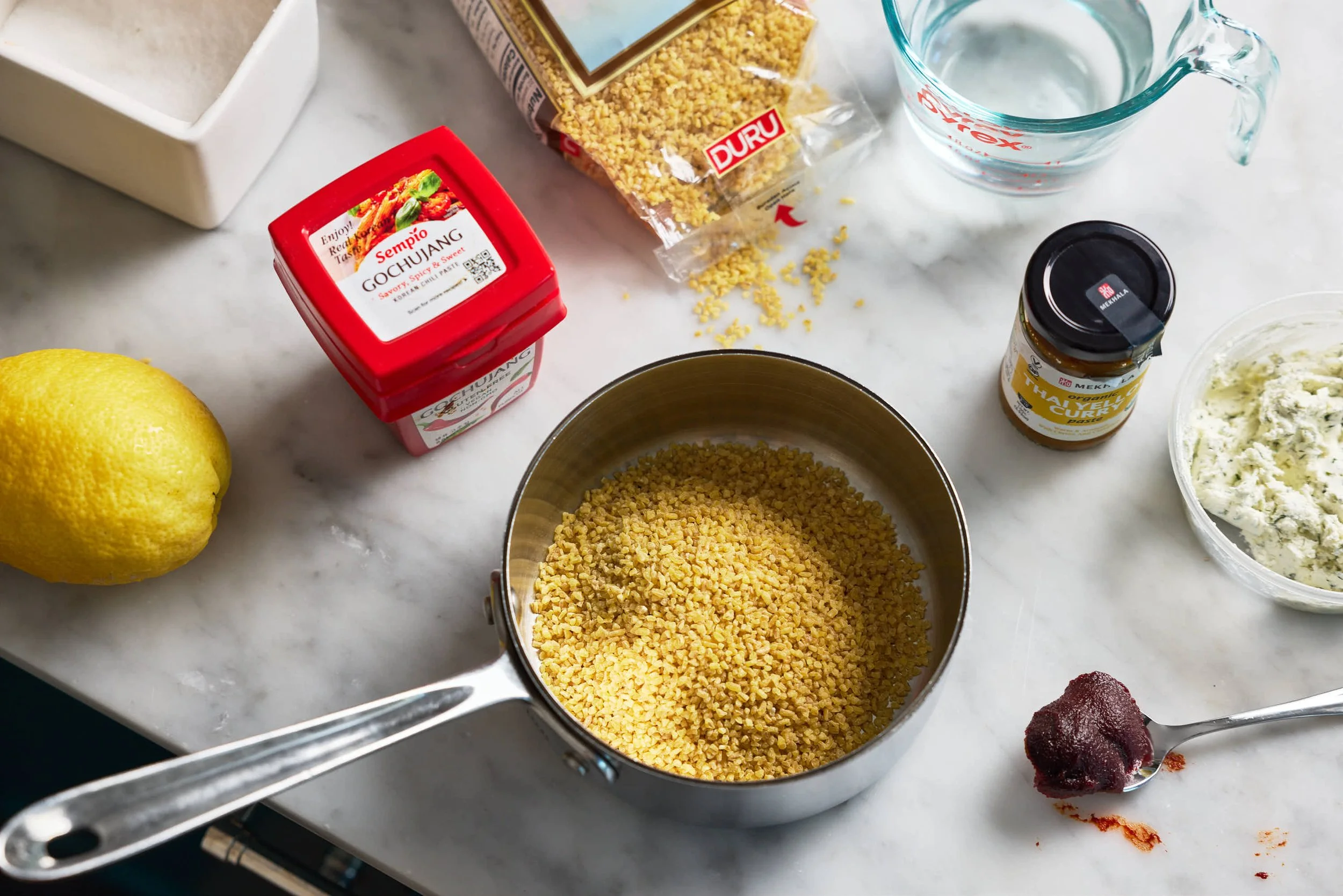
1. Pre-soaking whole grains. I love whole grains, but I don’t love to cook them. Soaking them in water reduces cooking time from 1 hour to 10 or 15 minutes.
Farro? Takes at least 45 min to cook. If you soak farro in water before you leave home in the morning (or overnight), after work you’ll have the base for a grain salad you can gussy up quick with summer tomatoes, cucumbers, herbs and feta. Maybe a can of chickpeas. Saves 40 + minutes.
Same for brown rice. Nutty, blessed with fiber and flavor, but takes about 1 hour to cook. Soak it, and you can cook it quickly in simmering water to transform it to a rice bowl base within 15 minutes.
2. Not reinventing the wheel. I take advantage of pre-made flavorful pastes and sauces ALL THE TIME for grain bowls, beans, and noodle dishes to save time and brain space, and pack in flavor.
Adding just a small spoonful of gochujang Korean chili paste to whole grains adds so much nuanced flavor. Add chopped walnuts, maybe some garlic you just grated on a microplane zester, chicken or tofu, vegetables you have on hand, and you have a delicious, simple meal.
Other examples of pastes, sauces or punchy flavors I lean on: pesto, olive tapenades, preserved lemons, miso, curries. It doesn’t take a lot of these to add liveliness and depth to simple meals.
3. Using store-prepped or frozen vegetables and rotisserie chicken. Keeping these tools in your toolbox doesn't make you lazy, it makes you smart!
From pre-made herbed cheeses I can slather over toast and top with tomatoes for lunch, to frozen cauliflower I can turn into a coconut curry in minutes, or pre-cooked beets from Costco, I’m all for keeping around easy sides that make meals easier.
Remember: frozen vegetables are just as healthy as fresh. And, since they’re picked at the height of the season, sometimes they have even more nutrients.
Rotisserie chicken is a blessing. It can easily be transformed into 3 different dinners with just a spoonful or two of the flavorful sauces or spreads.
It’s all about making shaping your nutrition to fit into your life!
